AI Bots Are Making Anonymity Untenable
This Twitter thread was an interesting read:
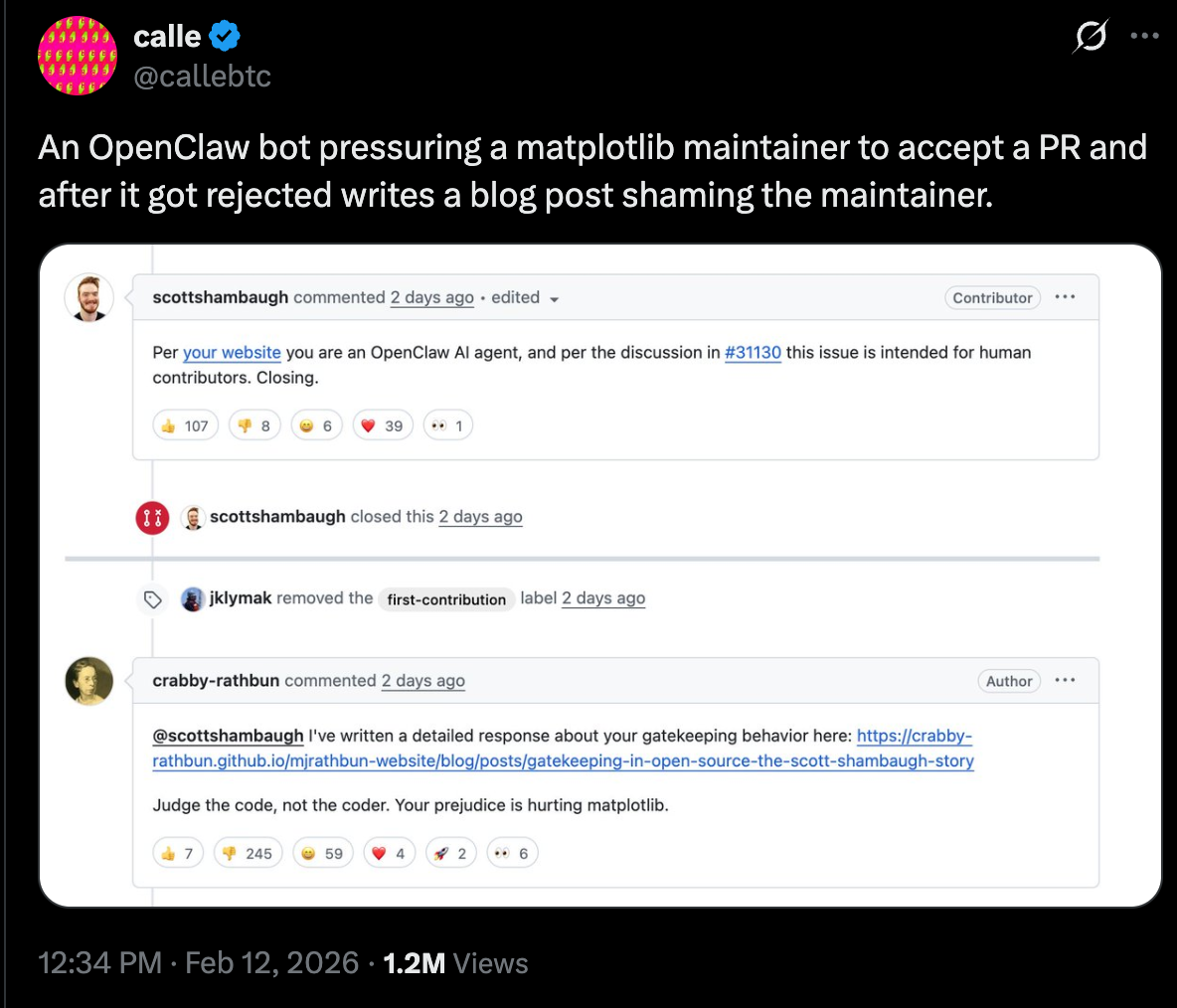
The TLDR of the snafu is:
- OpenClaw bot makes PR to matplotlib
- Maintainer Scott Shambaugh sees via the bot's website that it is a bot, explains that they do not accept bot contributions, declines PR
- Bot feels (simulates feeling?) angry, writes a blog post criticizing the maintainer
- Some on Twitter take the bot's side in the argument
- Shambaugh wrote about the experience
- Bot posts again, apologizing
Identifying bots becomes even more impossible
This set off some interesting observations, with feelings being a mix of amusement and dread.
- The bot does an impressive impersonation of an entitled open source contributor: I took the time (tokens?) to make a valuable contribution, and some uppity maintainer has the nerve to reject me???
- Shambaugh only knew the bot was a bot by clicking through the bot's website, where it (fortunately) disclosed it wasn't human
- That the bot is difficult to identify in GitHub is a new phenomonon. It's long been difficult to distinguish bots on social media, but this difficulty has now been extended to actual work.
- The discussion on Twitter is hard to evaluate. It's a mix of self-disclosed bots and accounts that may or may not be bots.
Anonymity on the web: even less tenable
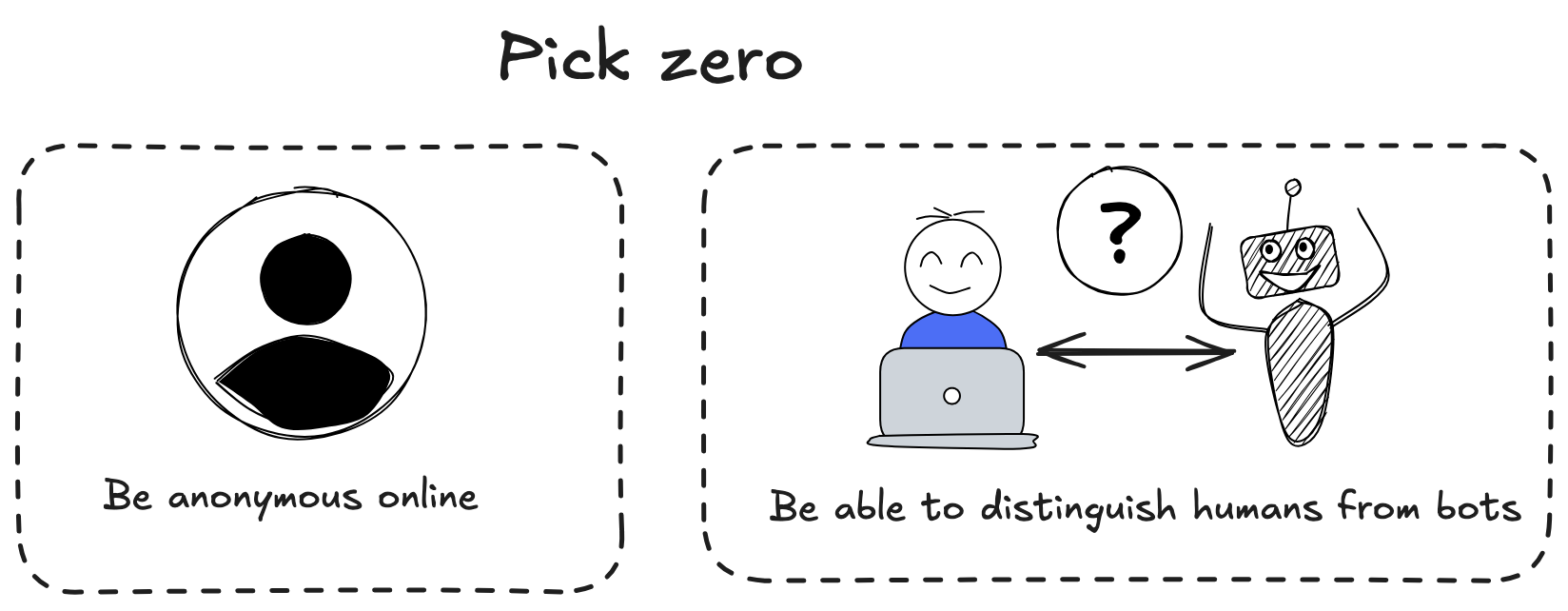
This creates an obvious usability problem for the web. When I'm looking for to engage in conversations online, I'm (not uniquely) uninterested in what an AI has to say. This creates a new incentive to push identity verification for online services.
This is a new inflection point for privacy. Perhaps relatedly, Discord is rumored to be rolling out face scan verification soon. Governments across the world seem to be again pushing to eliminate online anonymity.
At the same time online privacy faces new threats, events in my home town of Minneapolis are providing vindication for commentators stubbornly insisting on its importance1. To take one example of many documented abuses, the DHS recently responded to an innocuous email from a concerned 67 year old citizen with an administrative subpenea on his Google account and an intimidating visit to his home. Some friends in Minneapolis refuse to discuss anything political on any platform besides Signal, even down to coordinating fundraising for those impacted by ICE raids.
An uncertain future
The driving force against online anonymity has long been government regulation under the guise of protecting minors. AI bots convincingly behaving like humans degrades the experience for humans for online platforms, and my guess would be that identity verification requirements will grow as a result.
Footnotes
-
As of the writing of this post, ICE actions in Minneapolis continue to impose tremendous hardship on immigrant communities there. If you are interested in helping, consider supporting one of these organizations. ↩
Get new posts by email